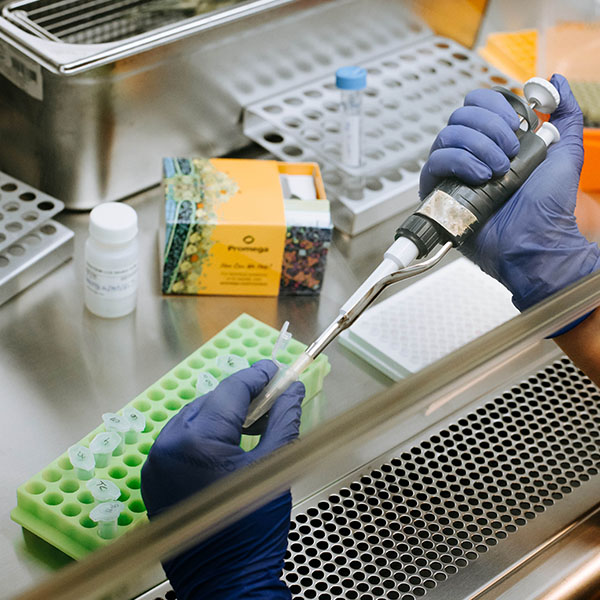
LDH-Glo™ Cytotoxicity Assay
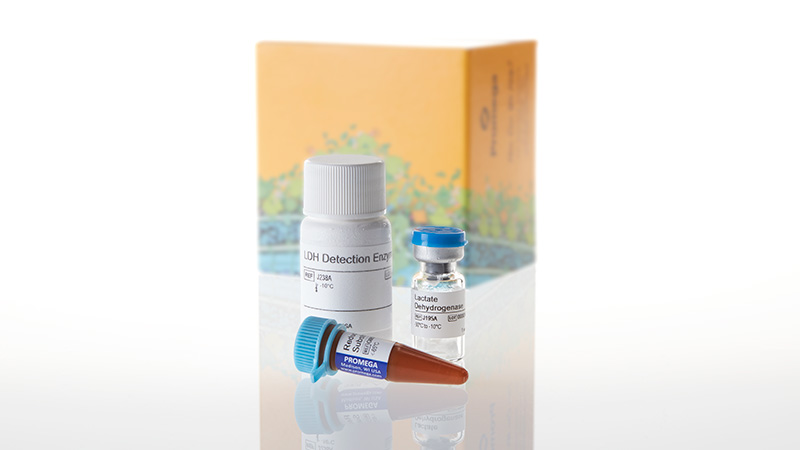
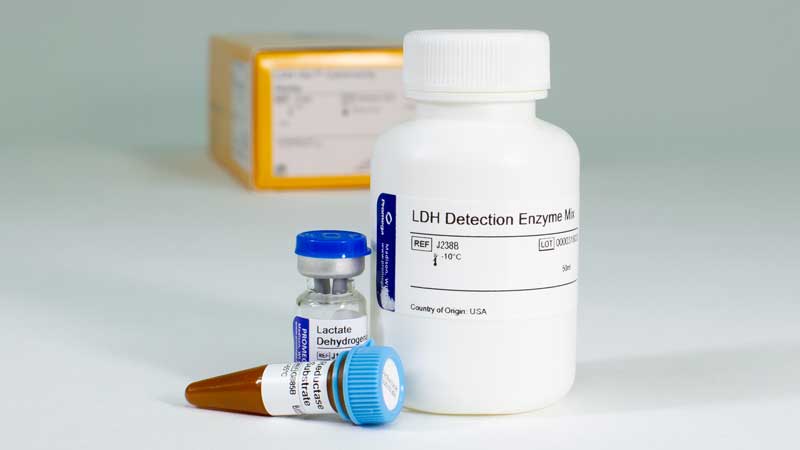
Simple, More Sensitive LDH Assay Method to Determine Cytotoxicity
- Detects LDH release from small numbers of cells, including 3D cell models
- Monitors cytotoxicity from the same sample over time
- Provides more data per well through multiplexing with other cell-based assays
- Integrates seamlessly with the MyGlo® Reagent Reader


Catalog Number:
Choose a product
Size
Catalog Number: J2380
Catalog Number: J2381
Monitor Cytotoxicity from Small Numbers of Cells
The LDH-Glo™ Cytotoxicity Assay is a bioluminescent plate-based assay for quantifying lactate dehydrogenase (LDH) release into the culture medium upon plasma membrane damage. The bioluminescent detection is more sensitive than colorimetric or fluorescent methods, allowing accurate detection of LDH from a small number of cells, including primary cells and 3D cell cultures.
This LDH assay involves removing only a small amount of cell media (2–5µl) from each treated well, allowing you to get more data by sampling the same well over time and by using the remaining media and cells for other cell-based assays.
How the Assay Works
LDH released from damaged cells catalyzes the oxidation of lactate with concomitant reduction of NAD+ to NADH. Reductase uses NADH and reductase substrate to generate luciferin, which is converted to a bioluminescent signal by Ultra-Glo™ Recombinant Luciferase. The luminescent signal generated is proportional to the amount of LDH present.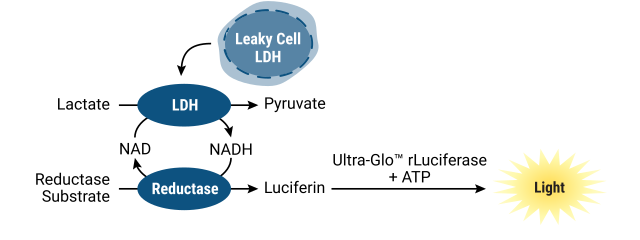
"The Promega LDH-Glo™ Assay is a reliable and easy-to-follow kit to use when measuring cell death. We use this in our lab, and compared to others, it really helps us get reliable data. Overall, we would highly recommend this kit."
LDH-Glo Customer
Monitor Cytotoxicity in 3D Cell Cultures
The LDH-Glo™ Cytotoxicity Assay is well-suited for measuring LDH released from small numbers of membrane-damaged cells. Here is an example of measuring drug-induced toxicity in HCT116 spheroids. The time-dependent toxicity measurements were performed by repeatedly sampling media from the same wells.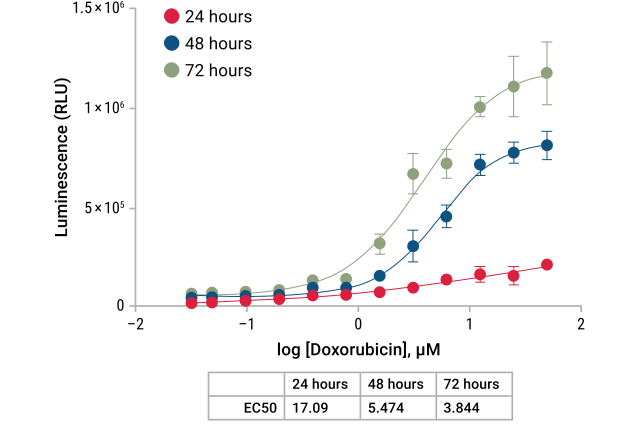
Detect Target Cell Cytotoxicity in ADCC Assays
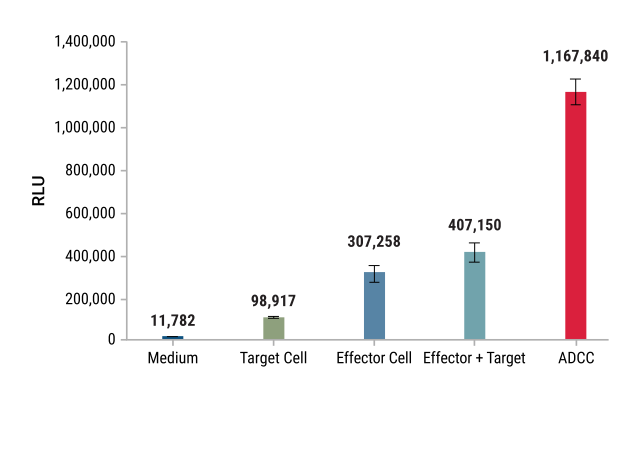
The LDH-Glo™ Cytotoxicity assay can be used to assess cell death due to many mechanisms of action of biologics treatments, including complement-dependent cytotoxicity (CDC), antibody-dependent cell-mediated cytotoxicity (ADCC) and antibody-drug conjugate cytotoxicity. In this example, the LDH-Glo™ Assay was used to detect ADCC killing of target cells using the biologic rituximab.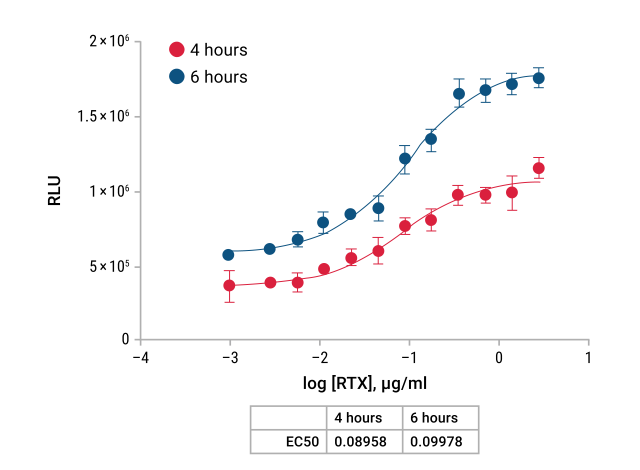
Pair with the MyGlo® Reagent Reader
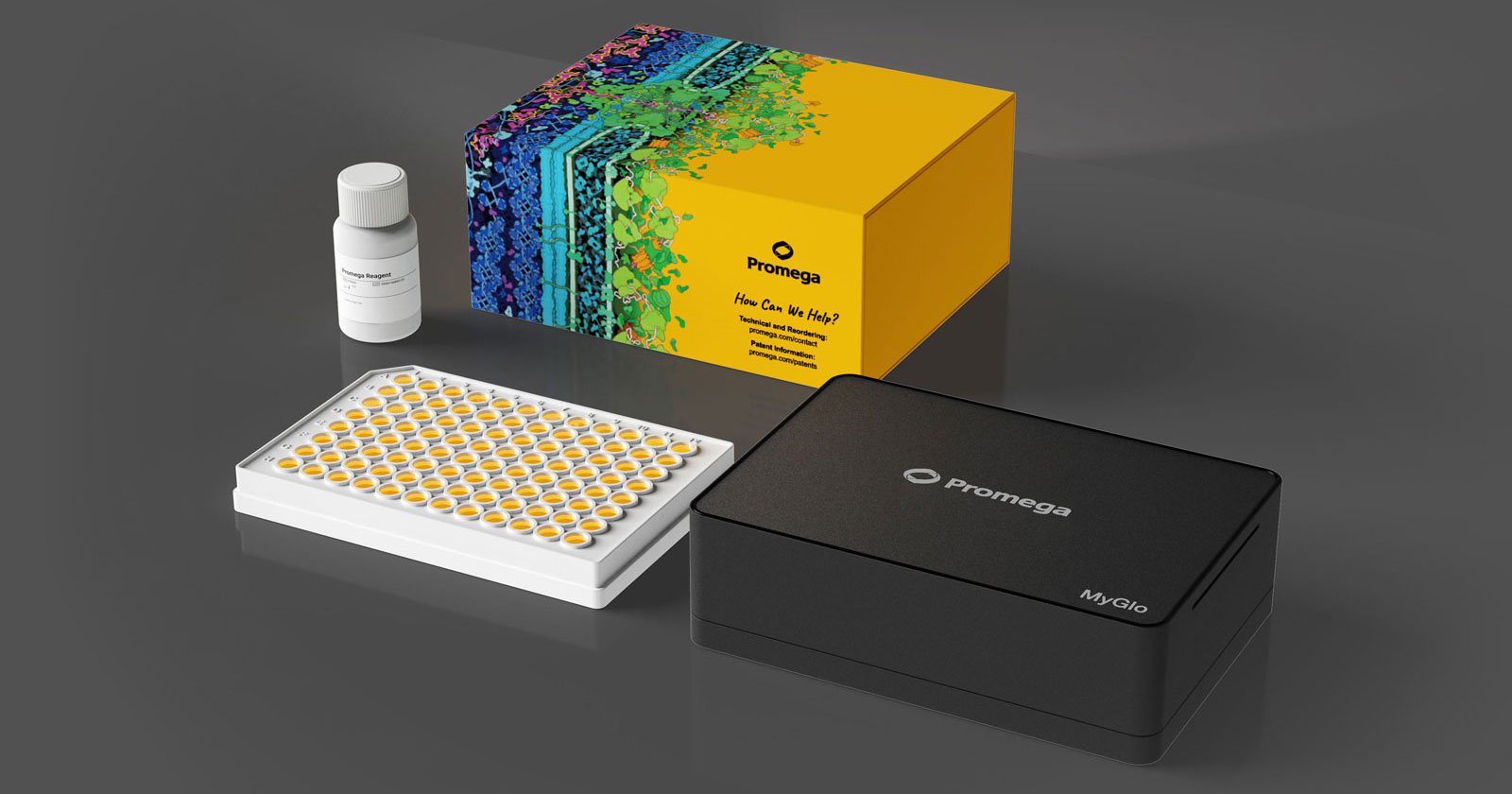
Reading your assay results doesn't require a shared plate reader. The MyGlo® Reagent Reader is a compact 96-well luminescence plate reader, enabling you to run luminescent assays at your bench without competing for instrument time. Integrated software generates dose response curves, single concentration and linearity analysis in minutes.
Protocols
Complete Protocol
Specifications
Catalog Number:
What's in the box?
| Item | Part # | Size |
|---|---|---|
Reductase Substrate |
G885A | 1 × 55μl |
Lactate Dehydrogenase |
J195A | 1 × 1 each |
LDH Detection Enzyme Mix |
J238A | 1 × 10ml |
SDS
Search for SDSCertificate of Analysis
Use Restrictions
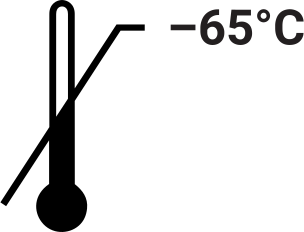
For Research Use Only. Not for Use in Diagnostic Procedures.Storage Conditions
U.S. Pat. Nos. 9,273,343 and 9,951,372, European Pat. No. 2751089, Japanese Pat. No. 6067019 and other patents pending.
What's in the box?
| Item | Part # | Size |
|---|---|---|
Reductase Substrate |
G885B | 1 × 275μl |
Lactate Dehydrogenase |
J195A | 1 × 1 each |
LDH Detection Enzyme Mix |
J238B | 1 × 50ml |
SDS
Search for SDSCertificate of Analysis
Use Restrictions
For Research Use Only. Not for Use in Diagnostic Procedures.Storage Conditions
U.S. Pat. Nos. 9,273,343 and 9,951,372, European Pat. No. 2751089, Japanese Pat. No. 6067019 and other patents pending.
Resources
Articles
- "Will This Drug Cause Hepatotoxicity?"
- App Note: Predicting gastrointestinal toxicity
- Impact of aerosols on liver xenobiotic metabolism: A comparison of two methods of exposure
- Folate and Vitamin B12 Deficiency Exacerbate Inflammation during Mycobacterium avium paratuberculosis (MAP) Infection.
- SARS‐CoV‐2‐reactive T‐cell receptors isolated from convalescent COVID‐19 patients confer potent T‐cell effector function
Other Resources
Related Products
Similar Products
CellTox™ Green Cytotoxicity Assay
Measures changes in membrane integrity. Kinetically monitors cytotoxicity up to 72 hours with multiplex capability.
G8741, G8742, G8743, G8731
CytoTox-Glo™ Cytotoxicity Assay
Highly sensitive luminescent cytotoxicity assay that measures the relative number of dead cells.
G9290, G9291, G9292
CytoTox-ONE™ Homogeneous Membrane Integrity Assay
A homogeneous, LDH-based fluorometric method for quantifying non-viable cells.
G7890, G7891, G7892
CytoTox-Fluor™ Cytotoxicity Assay
A single-reagent-addition, homogeneous, fluorescent assay that measures the relative number of dead cells in cell populations.
G9260, G9261, G9262
Frequently Used With
CellTiter-Glo® 3D Cell Viability Assay
A homogeneous method optimized to assess viability in 3D cell culture.
G9681, G9682, G9683
GloMax® Discover System
High-performance microplate reader for detecting luminescence, fluorescence and absorbance.
GM3000
RealTime-Glo™ MT Cell Viability Assay
A bioluminescent method to kinetically monitor viability in cell culture up to 72 hours.
G9711, G9712, G9713
Caspase-Glo® 3/7 Assay System
An easy-to-use, plate-based luminescent assay for detecting caspase-3/7 activity.
G8090, G8091, G8093, G8092