NanoBiT® β-Arrestin Recruitment Starter Kit
Real-Time Measurements of GPCR-β-Arrestin1/2 Interactions in Live Cells
- Monitor association and dissociation of β-arrestin1/2 with GPCR of choice
- Sensitivity of assay detects interactions using low levels of expression
- Single vector simplifies stable cell line creation and improves reproducibility
- Kit is amenable to high-throughput-screening formats

Catalog Number:
Choose a product
Catalog Number: CS1603B404
Catalog Number: CS1603B399
Real-Time β-Arrestin Recruitment in a Simplified, Single-Vector Format
NanoBiT® β-Arrestin Recruitment Starter Kit enables sensitive, live-cell measurement of GPCR:β-arrestin interactions using NanoBiT® technology, which consists of two complementary subunits, Large BiT (LgBiT) and Small BiT (SmBiT). These subunits produce a bright luminescent signal upon interaction, providing real-time insight into receptor signaling events relevant to a variety of disease states such as obesity and neurodegeneration. The kit enables creation of a single bidirectional vector co-expressing β-arrestin1 or β-arrestin2 and a C-terminally-tagged GPCR fused to either SmBiT or LgBiT, simplifying stable cell-line generation, ensuring balanced protein expression, reducing assay variability and accelerating drug discovery research.

β-arrestins are key regulators of GPCR signaling, responsible for receptor desensitization, internalization and activation of G protein-independent pathways. Monitoring their interaction with GPCRs provides essential insight into receptor function, trafficking and signaling bias—information that is critical for the development of therapeutics targeting specific pathways. With the ability to track these interactions in real time, this system is ideal for characterizing ligand activity, discovering biased agonists and profiling GPCR-targeting compounds in drug discovery applications.
BiBiT Approach to Stable Cell Line Development
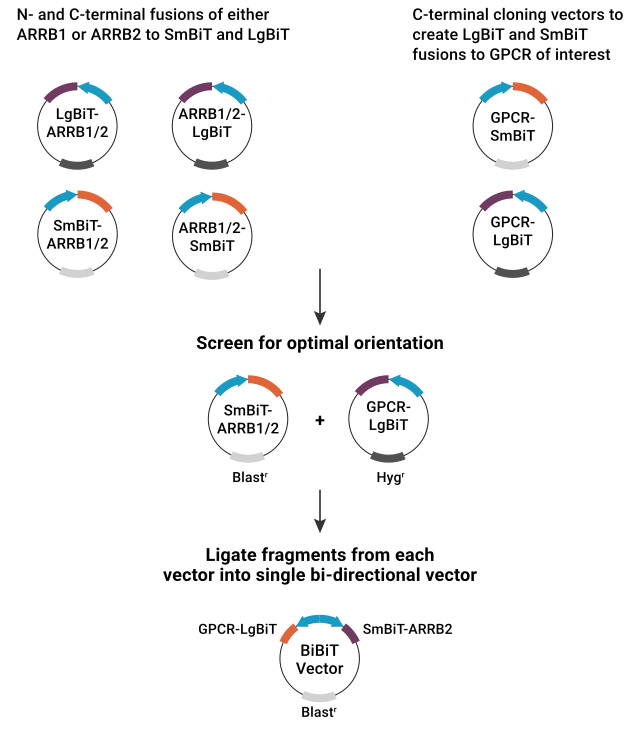
NanoBiT® β-Arrestin Recruitment Starter Kit utilizes NanoBiT® technology, which is based on two complementary luciferase subunits, LgBiT and SmBiT, that generate bright luminescence upon protein interaction. This kit includes four β-arrestin fusion variants (LgBiT or SmBiT) and two cloning vectors for generating C-terminal GPCR fusions (LgBiT or SmBiT), allowing optimization of the best tagging combination.
Stable cell lines can be efficiently generated either by leveraging independent antibiotic resistance genes or by using the BiBiT vector strategy to streamline cell line development, reduce variability and accelerate GPCR drug discovery.
Advantages of the BiBiT Single-Vector Approach
- Co-expression of both fusion proteins at similar levels from the same genomic locus
- Reduced variability between experimental wells
- Increased signal-to-background ratio
- Enhanced assay sensitivity
Kinetic Profiling of GPCR-β-Arrestin Interactions in Live Cells
NanoBiT® technology provides precise, reversible measurements of protein interactions in live cells. As demonstrated here, stimulation of β-adrenergic receptor 2 with isoproterenol induces rapid, transient recruitment of both β-arrestin1 and β-arrestin2 to the receptor, followed by clear dissociation over time. This ability to measure both the association and dissociation phases distinctly makes NanoBiT® technology an ideal tool for live-cell kinetic assays studying receptor desensitization and signaling dynamics.
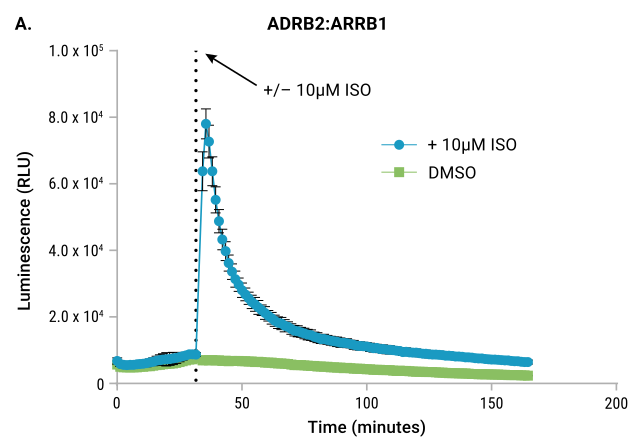
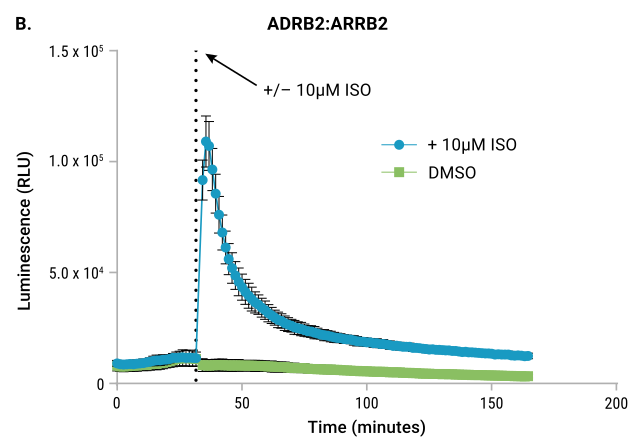
HEK293 cells were transiently transfected with BiBiT-Ready vectors encoding ADRB2-LgBiT and SmBiT-tagged ARRB1 or ARRB2. Following addition of Nano-Glo® Live Cell Reagent, baseline luminescence was monitored for 20 minutes prior to stimulation with 10μM isoproterenol, a β-adrenergic receptor agonist. Luminescence measurements were performed using the GloMax® Discover microplate reader with a 1-minute interval setting and a 1-second integration time.
Protocols
No protocols available
Specifications
Catalog Number:
Promega DNA Vector Limited Use Label License (LULL)
BY USE OF THIS MATERIAL, RECIPIENT AGREES TO BE BOUND BY THE TERMS OF THIS LIMITED USE LABEL LICENSE.
-
1. Usage Restrictions:
- 1.1. Recipient may use this material for research use only; no commercial use of this material is allowed without the written consent of Promega Corporation.
- 1.2. “Commercial use” means any and all uses of this material or derivatives by recipient for monetary or other consideration, including but not limited to product manufacture or resale of the material for any use and sale of derivatives for any use.
- 1.3. If recipient is a contract research organization (“CRO”), recipient may transfer or sell data or information generated using the material or derivatives to CRO’s customers who request such data or information, provided that the material or derivatives cannot be transferred from CRO to CRO’s customers.
-
2. Modification Restrictions:
- 2.1. Recipient shall have no right to modify or otherwise create variations of the nucleotide sequence of any proprietary gene including but not limited to luciferase, NanoBiT® technology (e.g., HiBiT), HaloTag® technology or genes included in fusion vectors.
- 2.2. Recipient shall have the right to make derivatives of cloning vectors by incorporating exogenous sequences provided the resulting fusion gene has <4 nucleotides deleted from the affected terminus of the proprietary genes.
-
3. For determinations of luminescence activity of this material and its derivatives, recipient must either:
- 3.1. Use Promega-branded luminescent assay reagents (LARs); or
- 3.2. Contact Promega to obtain a license for the use of LARs not manufactured by Promega.
-
4. For determinations of NanoLuc® or NanoBiT® luminescence activity of this material and its derivatives, recipient must either:
- 4.1. Use Nano-Glo®-branded LARs; or
- 4.2. Contact Promega to obtain a license for the use of LARs not manufactured by Promega.
-
5. For determinations of GloSensor™ activity of this material and its derivatives, recipient must either:
- 5.1. Use GloSensor™ cAMP Reagent for in vitro and in-cell applications, and VivoGlo™ Luciferin, In Vivo Grade, for animal applications for all determinations of luminescence activity of this product and derivatives); or
- 5.2. Contact Promega to obtain a license for the use of LARs not manufactured by Promega.
-
6. For uses of this material for energy transfer (such as bioluminescence resonance energy transfer), recipient must:
- 6.1. Use NanoBRET®-branded luminescent assay reagents (LARs; e.g., NanoBRET® Nano-Glo® Substrate), Intracellular TE Nano-Glo® Substrate/Inhibitor or Intracellular TE Nano-Glo® Vivazine™/Inhibitor for all determinations of luminescent activity by this material and its derivatives; and
- 6.2. Use NanoBRET®-branded energy acceptors (e.g., NanoBRET® tracers, NanoBRET® dyes, BRET-optimized HaloTag® ligands) for all determinations of energy transfer activity by this material and its derivatives; or
- 6.3. Contact Promega to obtain a license for the use of the material and its derivatives for energy transfer assays to energy acceptors not manufactured by Promega. No license is needed if the energy transfer acceptor is a genetically encoded auto-fluorescent protein.
-
7. For uses of HaloTag® Technology in this material, recipient must either:
- 7.1. Use Promega HaloTag® ligands, which can be modified or linked to Promega or customer-supplied moieties; or
- 7.2. Contact Promega to obtain a license if Promega HaloTag® ligands are not to be used.
-
8. Transfer of Materials:
- 8.1. Unmodified material or progeny of such material cannot be transferred.
- 8.2. Derivatives of cloning vectors can be transferred to others for research use provided that at the time of transfer a copy of this label license is given to the recipients and recipients agree to be bound by the terms of this label license.
- 8.3. If recipient is not a CRO, user may transfer this material to a CRO in order to have CRO use the material solely on behalf of recipient to provide recipient data or information, and CRO may transfer or sell such data or information to recipient, provided that recipient provides CRO with a copy of this label license and CRO agrees to comply with this label license.
- 8.4. Notwithstanding any other provision in this label license, the recipient can transfer the material (original or derivative of a cloning vector) to a third party for the sole purpose of amplification of the vector, provided that at the time of transfer a copy of this label license is given to the third party and the third party agrees to be bound by the terms of this label license. The third party may not use any of the material (original or amplified) for its own purposes or further transfer the material to any other party.
-
9. Other Uses:
- 9.1. For any uses outside this label license, including any diagnostic, therapeutic, prophylactic or commercial uses, contact Promega for supply and licensing information.
-
10. Disclaimer and Governing Law:
- 10.1. PROMEGA MAKES NO REPRESENTATIONS OR WARRANTIES OF ANY KIND, EITHER EXPRESSED OR IMPLIED, INCLUDING FOR MERCHANTABILITY OR FITNESS FOR A PARTICULAR PURPOSE, WITH REGARD TO THE MATERIAL. The terms of this label license shall be governed under the laws of the State of Wisconsin, USA.
Promega DNA Vector Limited Use Label License (LULL)
BY USE OF THIS MATERIAL, RECIPIENT AGREES TO BE BOUND BY THE TERMS OF THIS LIMITED USE LABEL LICENSE.
-
1. Usage Restrictions:
- 1.1. Recipient may use this material for research use only; no commercial use of this material is allowed without the written consent of Promega Corporation.
- 1.2. “Commercial use” means any and all uses of this material or derivatives by recipient for monetary or other consideration, including but not limited to product manufacture or resale of the material for any use and sale of derivatives for any use.
- 1.3. If recipient is a contract research organization (“CRO”), recipient may transfer or sell data or information generated using the material or derivatives to CRO’s customers who request such data or information, provided that the material or derivatives cannot be transferred from CRO to CRO’s customers.
-
2. Modification Restrictions:
- 2.1. Recipient shall have no right to modify or otherwise create variations of the nucleotide sequence of any proprietary gene including but not limited to luciferase, NanoBiT® technology (e.g., HiBiT), HaloTag® technology or genes included in fusion vectors.
- 2.2. Recipient shall have the right to make derivatives of cloning vectors by incorporating exogenous sequences provided the resulting fusion gene has <4 nucleotides deleted from the affected terminus of the proprietary genes.
-
3. For determinations of luminescence activity of this material and its derivatives, recipient must either:
- 3.1. Use Promega-branded luminescent assay reagents (LARs); or
- 3.2. Contact Promega to obtain a license for the use of LARs not manufactured by Promega.
-
4. For determinations of NanoLuc® or NanoBiT® luminescence activity of this material and its derivatives, recipient must either:
- 4.1. Use Nano-Glo®-branded LARs; or
- 4.2. Contact Promega to obtain a license for the use of LARs not manufactured by Promega.
-
5. For determinations of GloSensor™ activity of this material and its derivatives, recipient must either:
- 5.1. Use GloSensor™ cAMP Reagent for in vitro and in-cell applications, and VivoGlo™ Luciferin, In Vivo Grade, for animal applications for all determinations of luminescence activity of this product and derivatives); or
- 5.2. Contact Promega to obtain a license for the use of LARs not manufactured by Promega.
-
6. For uses of this material for energy transfer (such as bioluminescence resonance energy transfer), recipient must:
- 6.1. Use NanoBRET®-branded luminescent assay reagents (LARs; e.g., NanoBRET® Nano-Glo® Substrate), Intracellular TE Nano-Glo® Substrate/Inhibitor or Intracellular TE Nano-Glo® Vivazine™/Inhibitor for all determinations of luminescent activity by this material and its derivatives; and
- 6.2. Use NanoBRET®-branded energy acceptors (e.g., NanoBRET® tracers, NanoBRET® dyes, BRET-optimized HaloTag® ligands) for all determinations of energy transfer activity by this material and its derivatives; or
- 6.3. Contact Promega to obtain a license for the use of the material and its derivatives for energy transfer assays to energy acceptors not manufactured by Promega. No license is needed if the energy transfer acceptor is a genetically encoded auto-fluorescent protein.
-
7. For uses of HaloTag® Technology in this material, recipient must either:
- 7.1. Use Promega HaloTag® ligands, which can be modified or linked to Promega or customer-supplied moieties; or
- 7.2. Contact Promega to obtain a license if Promega HaloTag® ligands are not to be used.
-
8. Transfer of Materials:
- 8.1. Unmodified material or progeny of such material cannot be transferred.
- 8.2. Derivatives of cloning vectors can be transferred to others for research use provided that at the time of transfer a copy of this label license is given to the recipients and recipients agree to be bound by the terms of this label license.
- 8.3. If recipient is not a CRO, user may transfer this material to a CRO in order to have CRO use the material solely on behalf of recipient to provide recipient data or information, and CRO may transfer or sell such data or information to recipient, provided that recipient provides CRO with a copy of this label license and CRO agrees to comply with this label license.
- 8.4. Notwithstanding any other provision in this label license, the recipient can transfer the material (original or derivative of a cloning vector) to a third party for the sole purpose of amplification of the vector, provided that at the time of transfer a copy of this label license is given to the third party and the third party agrees to be bound by the terms of this label license. The third party may not use any of the material (original or amplified) for its own purposes or further transfer the material to any other party.
-
9. Other Uses:
- 9.1. For any uses outside this label license, including any diagnostic, therapeutic, prophylactic or commercial uses, contact Promega for supply and licensing information.
-
10. Disclaimer and Governing Law:
- 10.1. PROMEGA MAKES NO REPRESENTATIONS OR WARRANTIES OF ANY KIND, EITHER EXPRESSED OR IMPLIED, INCLUDING FOR MERCHANTABILITY OR FITNESS FOR A PARTICULAR PURPOSE, WITH REGARD TO THE MATERIAL. The terms of this label license shall be governed under the laws of the State of Wisconsin, USA.
Resources
Featured Resource
Explore GPCR Dynamics in Obesity and Diabetes Research
G protein-coupled receptors (GPCRS) have become pivotal therapeutic targets for obesity and diabetes treatments. By leveraging bioluminescent tools such as the NanoBiT® β-Arrestin Recruitment Starter Kit, researchers can gain insights into GPCR dynamics.
Discover how Promega scientists utilized NanoBiT® technology to analyze various obesity treatments and their pharmacological effects on the GLP-1R receptor by reading our scientific poster.

Articles
Other Resources
Related Products
Similar Products
Frequently Used With
cAMP-Glo™ Max Assay
30-minute, high-throughput assay for cAMP in cells.
V1681, V1682, V1683
GloSensor™ Technology
Live-cell biosensors for cAMP, cGMP or protease activity.
E1290, E1291, E2301, E1171
NanoBiT® PPI Control Vectors
Validated positive, negative and performance controls for NanoBiT® PPI assay workflows.
CS1603B407, CS1603B440