Metabolic Profiling of 3D Brain Organoids Using Bioluminescence-Based Assays
Publication date: June 2025
Introduction
Cortical brain organoids are self-organizing, three-dimensional cellular structures derived from human pluripotent stem cells (hPSCs) that mimic key aspects of human brain structure and function. These lab-grown models are created through a process called "directed differentiation," where stem cells are cultured under controlled conditions and exposed to specific growth factors that replicate the signals driving neural development, allowing the cells to aggregate and self-organize into structures resembling the brain’s cortex (Shi et al., 2012).
Unlike traditional 2D cell culture systems, which lack the complexity of native tissues, 3D cultures better replicate spatial organization and cell-cell interactions. These cortical brain organoid models improve the predictive accuracy of preclinical drug testing and can be tailored to individual genetic or molecular profiles, offering valuable insights into conditions such as Alzheimer’s, schizophrenia, cancer, and other neurological disorders. Thus, the complexity of 3D cortical brain organoids as a model system is increasingly recognized for its enhanced physiological relevance.
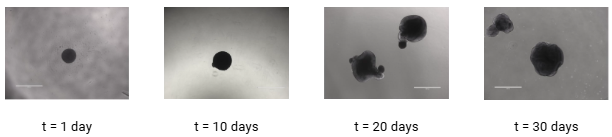
Cellular metabolism plays a critical role in organoid development, influencing differentiation, energy balance, and disease modeling. Tracking metabolic changes can provide valuable insights into organoid health, functionality, and reproducibility. Stevens Rehen, PhD, a Senior Scientist at Promega specializing in 3D organoid models and disease modeling, highlights how integrating metabolic data enhances these capabilities.
"By integrating metabolic data, we move beyond structural validation toward functional assessments that can predict developmental success or failure before visible defects emerge, improving reproducibility and making organoid models more robust for both basic and translational research." – Stevens Rehen, PhD
As interest in metabolic research within 3D models continues to grow, researchers are exploring how metabolism shapes neural development and contributes to disease modeling. Jolanta Vidugiriene, PhD, a senior scientist at Promega specializing in cell health and metabolite assay development, highlights the emerging focus on metabolic pathways in 3D models.
"Research on metabolism in 3D models, including cortical brain organoids, is advancing to better address the complexities of in vivo-like microenvironments. There is growing interest in how key metabolic pathways, such as glycolysis and oxidative phosphorylation, contribute to neural development and how metabolic stressors, including hypoxia and nutrient limitations, impact organoid function." – Jolanta Vidugiriene, PhD
Bioluminescence-based metabolite assays provide a powerful approach for monitoring metabolism in 3D cortical brain organoids. There are technical challenges associated with traditional methods of metabolic profiling, including high cost and the destructive nature of most assays. While structural characterization is frequently used to assess organoid maturity, these structural approaches offer limited insights into the functional state, fitness, and reproducibility of the tissues. This study presents a proof-of-concept demonstrating the feasibility of non-destructive metabolic monitoring in brain organoids using bioluminescence-based assays (See our full catalog of Metabolic Activity Assays). Analysis is performed on cell culture supernatants, preserving the brain organoids for further growth and subsequent analysis. The assays are highly sensitive, allowing detection of subtle changes in metabolite secretion or consumption from single organoids. The fast and straightforward protocol enables longitudinal tracking of metabolic shifts throughout organoid development, providing valuable insights into cellular function, differentiation, disease modeling, drug testing, and quality control in 3D brain organoid culture systems.
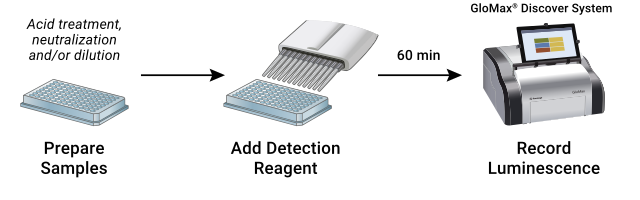
Workflow of cellular metabolism assays. Detection of metabolites in samples can be performed in ~60 minutes on a luminometer, such as the GloMax® Discover.
The GloMax® Discover is for Research Use Only.
Metabolic Readouts in 3D Organoids
Glucose and Lactate: Tracking Energy Metabolism
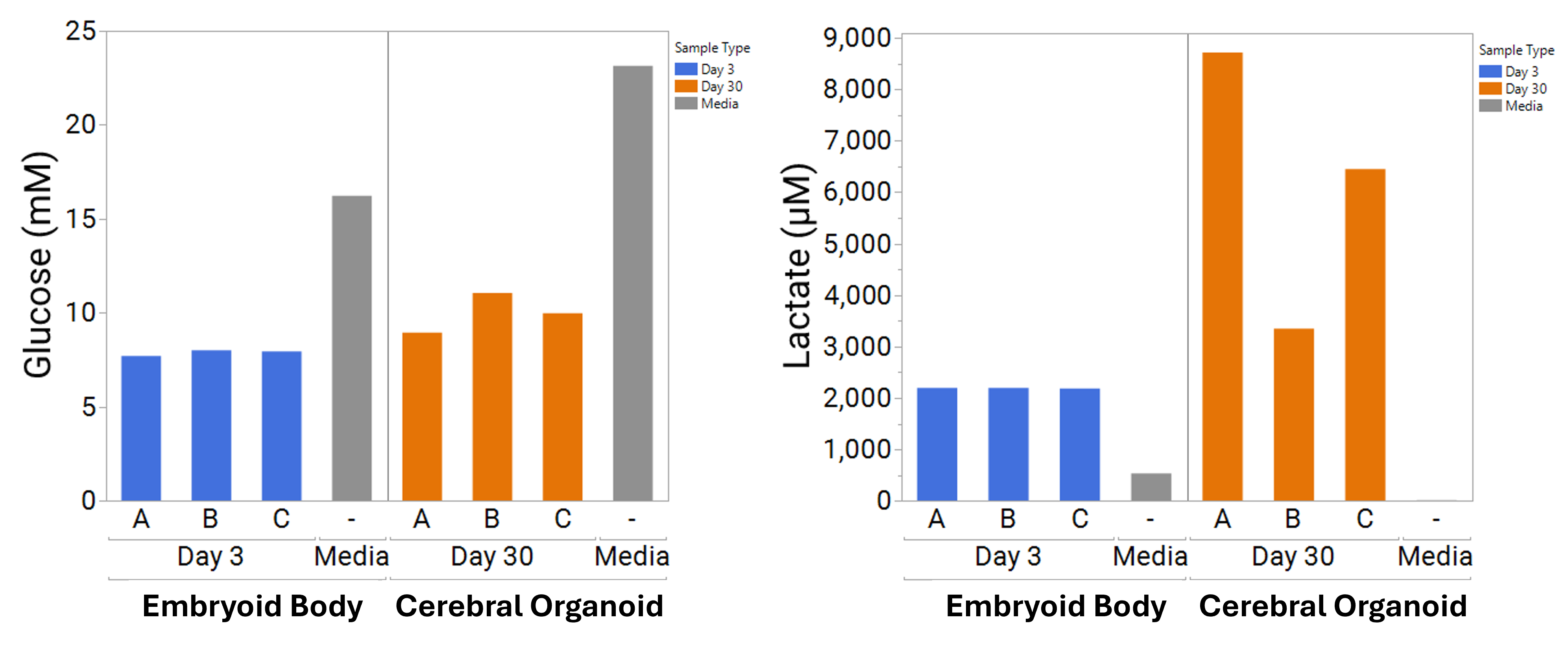
Tracking glucose consumption rate reflects the cortical brain organoids cellular energy demands during growth and differentiation. Since glucose serves as the primary energy source for cells, the balance between supply and consumption highlights key insights into developmental processes.
Changes in lactate, a byproduct of glycolysis, indicate a shift toward anaerobic metabolism, even in oxygen-rich conditions—a phenomenon known as the Warburg effect. Elevated lactate levels may signal stress, hypoxia, or altered energy metabolism, making it a critical factor in modeling disease states.
"Without metabolic monitoring, we lack early warning systems for culture failures, batch-to-batch validation, and functional maturity assessments, severely limiting the reliability of organoid-based research." - Stevens Rehen, PhD
BCAA and Glutamate: Assessing Neuronal Function and Toxicity
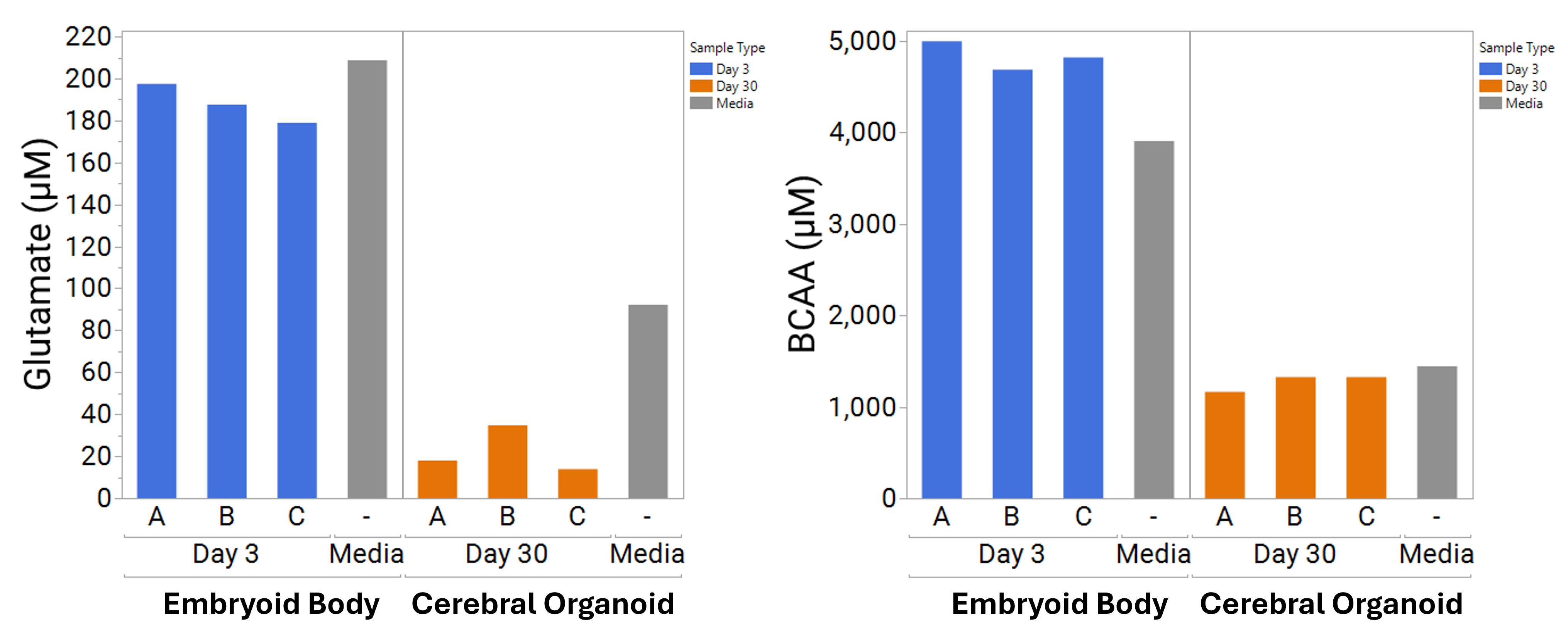
Monitoring branched-chain amino acids (BCAAs) provides critical insights into amino acid utilization, cellular energy dynamics, and stress responses, processes essential for accurately modeling metabolic and neurodegenerative disorders. Dysregulation in BCAA metabolism has also been associated with neurological and neurodegenerative diseases, including Alzheimer’s and Parkinson’s diseases.
Measuring glutamate is important because it serves as a key neurotransmitter, reflecting neuronal activity, synaptic function, and overall metabolic health in cortical brain organoids. Additionally, monitoring glutamate levels is critical since excessive release can lead to excitotoxicity, a damaging process characteristic of neurodegenerative diseases such as ALS, epilepsy, and Huntington’s.
Pyruvate and Malate: Mitochondrial Health and Disease Progression
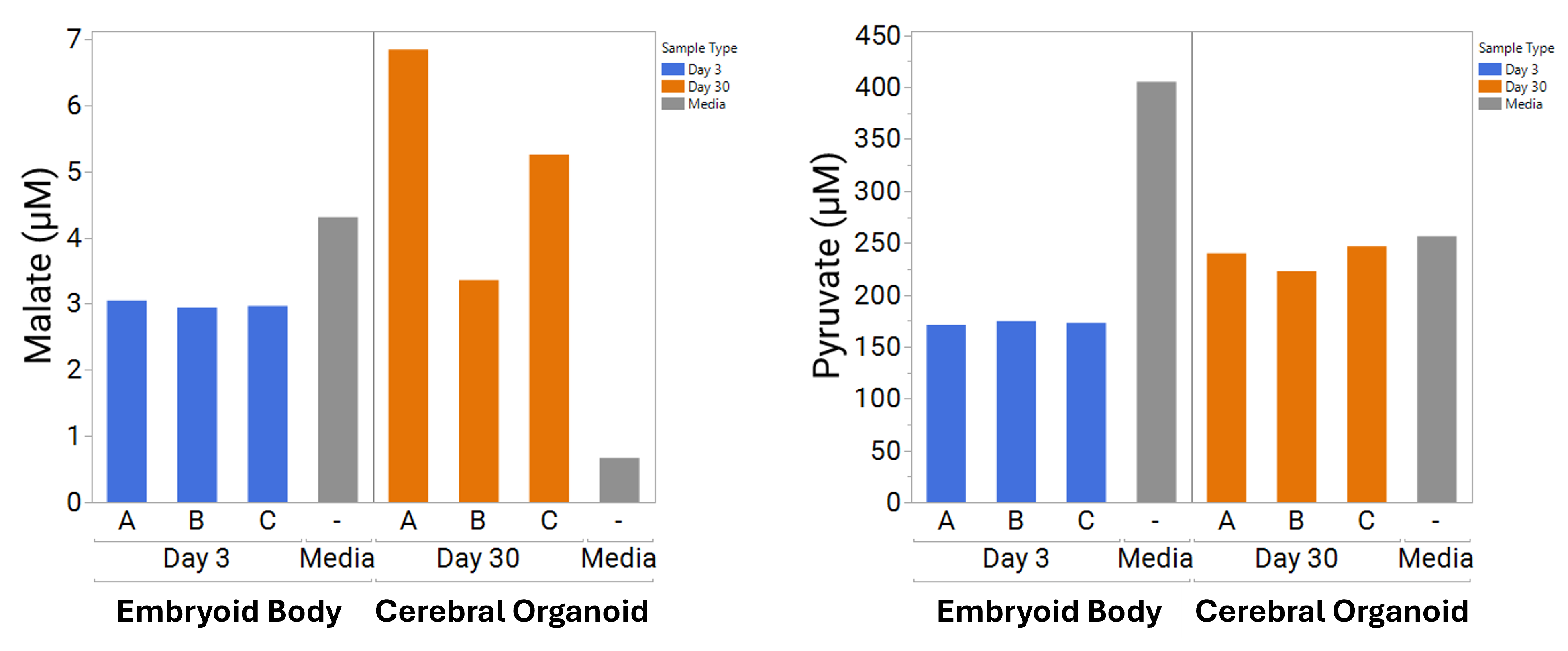
Analyzing pyruvate is valuable because it serves as a central metabolic hub linking glycolysis to the TCA cycle and mitochondrial respiration, making it a key indicator of energy metabolism shifts in 3D cortical brain organoids. Changes in pyruvate levels can reflect critical metabolic transitions during differentiation, maturation, or disease progression, particularly in cancer and metabolic disorders. Similarly, evaluating malate is important because, as an essential intermediate in the TCA cycle, it influences mitochondrial energy production and helps maintain cellular redox balance.
"Measuring these metabolites under drug treatment conditions provides insights into whether a candidate compound supports aerobic metabolism and mitochondrial function." – Stevens Rehen, PhD
Applications for Metabolite Monitoring in Organoid Cultures
Ensuring Batch-to-Batch Consistency
One of the primary challenges in 3D cortical brain organoid research is ensuring reproducibility and batch-to-batch consistency. Even when using the same iPSC line and differentiation protocol, variability can arise due to differences in nutrient consumption, oxygen availability, and cellular stress responses. Integrating metabolic readouts at multiple time points during differentiation enables early detection of deviations from expected trajectories, allowing for timely intervention through media adjustments, oxygenation control, or protocol modifications.
Dr. Stevens Rehen, a Senior Scientist and pioneer in 3D cortical brain organoid research, emphasizes, "This shift toward functional validation is what will allow organoids to move beyond basic research and into clinical and translational applications with true predictive power."
Standardizing metabolic fingerprints enhances quality control, reducing variability and increasing confidence in experimental outcomes.
Illuminating Early Brain Development
Metabolic profiling is a powerful tool for studying neurodevelopment, offering time-resolved insights into energy utilization, nutrient consumption, and cellular stress responses—unlike traditional structural markers, which typically rely on endpoint, destructive methods such as tissue imaging or microscopic analysis.
Dr. Jolanta Vidugiriene, a Senior Scientist specializing in cell health and assay development, explains, "Research on metabolism in 3D brain organoid models is advancing to better address the complexities of in vivo-like microenvironments. There is growing interest in how key metabolic pathways, such as glycolysis and oxidative phosphorylation, contribute to neural development, and how metabolic stressors, including hypoxia and nutrient limitations, impact organoid function."
As cortical brain organoids differentiate, they undergo metabolic transitions that influence cell fate decisions, neuronal maturation, and synapse formation. Monitoring these pathways provides an additional, dynamic perspective on organoid development and differentiation.
Capturing Disease-Specific Metabolic Signatures
Metabolite assays offer significant potential in disease modeling, particularly for neurodegenerative disorders like Alzheimer’s and Parkinson’s, where metabolic dysfunction often emerges before hallmark pathologies such as amyloid plaques or dopaminergic neuron loss.
Dr. Stevens Rehen, who grows cortical brain organoids from patient-derived iPSCs, explains, “Alzheimer’s disease organoids have demonstrated alterations in glucose metabolism and mitochondrial respiration that precede amyloid-beta accumulation, reinforcing the idea that metabolic dysfunction is a primary rather than secondary feature of the disease. Similarly, Parkinson’s disease models derived from patient iPSCs reveal impaired mitochondrial function and altered pyruvate metabolism, while schizophrenia organoids may exhibit disrupted glutamate homeostasis, supporting hypotheses about excitatory-inhibitory imbalances in early brain development.” (Holubiec et al., 2023; Villanueva, 2023; Zagare et al., 2025).
Detecting metabolic deviations in disease organoid models helps distinguish true pathological phenotypes from technical artifacts, enhancing the reliability of disease modeling.
Screening Therapeutics with Metabolic Readouts
In drug development, metabolite assays can be leveraged to identify lead candidates across various therapeutic areas.
Dr. Stevens Rehen explains, “Metabolite assays provide a vital tool for drug screening and toxicity assessment. In high-throughput settings, traditional viability assays often miss early metabolic shifts that precede cell death. By incorporating metabolic readouts, we can detect toxicity sooner, reducing false-positive hits that might otherwise advance through the drug development pipeline.”
Incorporating metabolite assays into preclinical drug screening has the potential to improve efficiency and enhance the translation of promising therapies into clinical trials.
Metabolic Insights for Precision Medicine
Metabolic readouts enhance reproducibility in personalized medicine. Patient-derived iPSCs (induced pluripotent stem cells) often exhibit inherent metabolic differences due to genetic backgrounds or epigenetic modifications. Integrating metabolic readouts distinguishes whether an observed disease phenotype stems from genuine pathology or metabolic drift in culture conditions. This is particularly relevant for disorders with known metabolic underpinnings, such as mitochondrial diseases, neurodegenerative conditions, and metabolic syndromes.
Dr. Rehen noted, "The role of metabolic profiling extends beyond quality control into disease modeling, where it helps differentiate between true pathological phenotypes and technical artifacts. Patient-derived iPSCs often carry metabolic predispositions that can influence differentiation, making it difficult to determine whether observed abnormalities stem from disease-related dysfunction or metabolic drift in culture conditions".
Conclusion
This work demonstrates the feasibility of using bioluminescence-based metabolite assays to track metabolite changes in 3D brain organoids. By enabling a scalable, high-throughput, and non-destructive approach, these assays offer a valuable tool for assessing metabolic activity in developing organoids. The ability to observe distinct metabolic behaviors in individual organoids reinforces the importance of metabolism as a functional readout in organoid research. As organoids become increasingly relevant in personalized medicine, disease modeling, and drug discovery, metabolic profiling will be essential for ensuring their validity as physiological models. This proof-of-concept highlights how Promega’s metabolite assays can streamline this process, providing a simple yet powerful approach to evaluating organoid metabolism.
While these results establish a foundation for metabolic monitoring in 3D cultures, further research is needed to validate these findings across different organoid models and experimental conditions. By measuring multiple metabolites in parallel, researchers can extract rich datasets from limited samples, enhancing reproducibility and enabling more precise comparisons across experimental conditions. This has applications in high-throughput workflows where metabolic activity could be used to characterize appropriate development or brain organoids.
Overall, the integration of bioluminescence-based metabolite assays into 3D cortical brain organoid workflows represents an important advancement in the field. These assays open a previously unexplored avenue for functional assessment of metabolism in 3D models, providing critical insights that extend across neurodevelopment, disease modeling, and drug discovery. As researchers continue to refine organoid models to make them more physiologically relevant, metabolic profiling will serve as a foundational tool for understanding cellular function, improving reproducibility, and driving innovation across multiple disciplines.
Want to learn more? Read the full Application Note. Metabolite Measurements in Brain Organoid Media on the Hamilton MagEx STAR.
Citations
Holubiec, M. I., Alloatti, M., Bianchelli, J., Greloni, F., Arnaiz, C., Gonzalez Prinz, M., Fernandez Bessone, I., Pozo Devoto, V., & Falzone, T. L. (2023). Mitochondrial vulnerability to oxidation in human brain organoids modelling Alzheimer’s disease. Free Radical Biology and Medicine, 208, 394–401. https://doi.org/10.1016/j.freeradbiomed.2023.08.028
Shi, Y., Kirwan, P., & Livesey, F. J. (2012). Directed differentiation of human pluripotent stem cells to cerebral cortex neurons and neural networks. Nature Protocols, 7(10), 1836–1846. https://doi.org/10.1038/nprot.2012.116
Villanueva, R. (2023). Advances in the knowledge and therapeutics of schizophrenia, major depression disorder, and bipolar disorder from human brain organoid research. In Frontiers in Psychiatry (Vol. 14). Frontiers Media SA. https://doi.org/10.3389/fpsyt.2023.1178494
Zagare, A., Sauter, T., Barmpa, K., Pacheco, M., Krüger, R., Schwamborn, J. C., & Saraiva, C. (2025). MIRO1 mutation leads to metabolic maladaptation resulting in Parkinson’s disease-associated dopaminergic neuron loss. NPJ Systems Biology and Applications, 11(1), 37. https://doi.org/10.1038/s41540-025-00509-x


Learn More
Promega offers a large portfolio of ready-to-use assays to measure metabolic activity. Explore the full portfolio for measuring key metabolites in cellular energy metabolism.
Related Resources
Assays and Tools to Monitor Biology in 3D Cell Cultures
We offer assays and tools to address each step in your workflow, from cell health and metabolic changes to gene expression and analysis.
Metabolic Disease Research Solutions
Metabolic diseases encompass a range of disorders arising from disruptions in the body's metabolic processes. Promega provides researchers advanced tools to study these conditions.