NanoBRET® BiBRET PPI Starter System

Single-Vector System for Fast, Reliable PPI Detection in Live Cells
- Expresses both fusion proteins from one plasmid, improving reproducibility
- Supports drug discovery, signaling pathway analysis and high-throughput screening
- Provides live-cell detection options for endpoint and kinetic analysis

Catalog Number:
Size
Catalog Number: CS1679C169
High-Sensitivity Detection of Protein Interactions using a BiBRET System
NanoBRET® BiBRET PPI Starter System enables sensitive, real-time measurement of protein:protein interactions in live cells using a single vector system. The kit includes expression vectors driven by a bidirectional CMV promoter to support stable co-expression of fusion proteins from the same locus.
This system combines the bright-blue NanoLuc® Luciferase donor with a red-shifted fluorescent HaloTag® NanoBRET® acceptor to optimize spectral separation, resulting in higher signal and lower background compared to conventional BRET assays.

Learn about NanoBRET® Technology in this video.
BiBRET Approach to Stable Cell Line Development
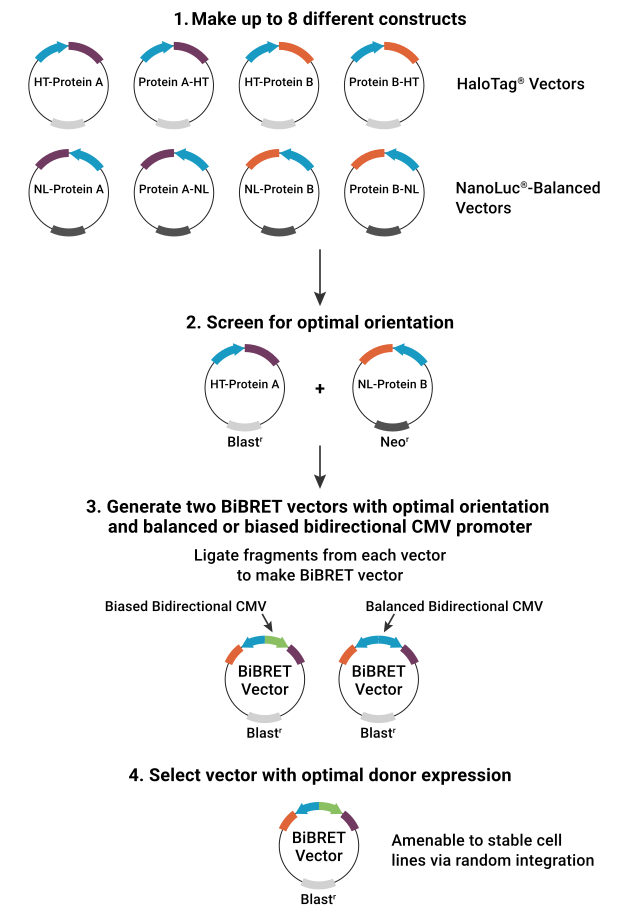
Up to eight constructs are made for a given PPI to screen for the optimal tagging orientation and donor expression levels that yield the best NanoBRET® ratio. A single BiBRET vector can then be created by ligating the BiBRET-Ready vectors with the optimal tagging orientation and either a balanced or biased NanoLuc® Vector to achieve the appropriate donor and acceptor expression via a bidirectional CMV promoter.
Advantages of the BiBRET Single-Vector Approach
- Co-expression of both HaloTag® and NanoLuc® fusion proteins from the same locus
- Reduced variability between experimental wells
- Increased signal-to-background ratio
- Enhanced assay sensitivity
Study Selective Signaling and Compound Activity in a Live-Cell Format
The NanoBRET® BiBRET PPI Starter System enables real-time, live-cell analysis of protein interactions using a single bidirectional vector. This system is ideal for evaluating mutant-selective responses and compound effects with high sensitivity and reproducibility. Utilize the power of BiBRET to study selective signaling and compound activity in a biologically relevant, live-cell format.
Key Benefits:
- Quickly detect subtle changes in protein:protein interactions across variants
- Minimize variability with co-expression from a single plasmid
- Monitor compound activity and signaling specificity in a physiologically relevant format
- Compatible with high-throughput screening and kinetic studies
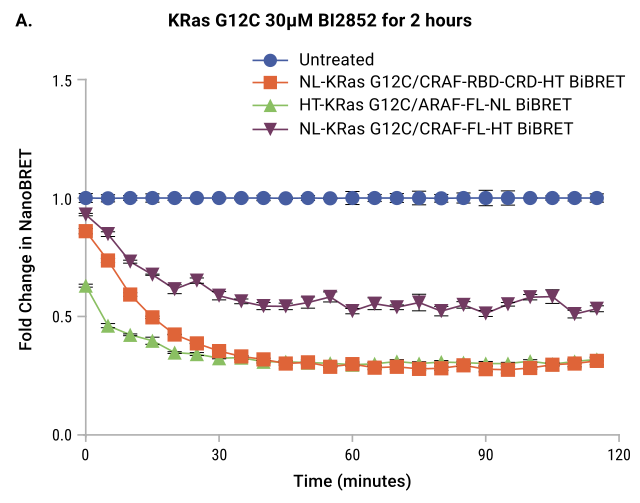
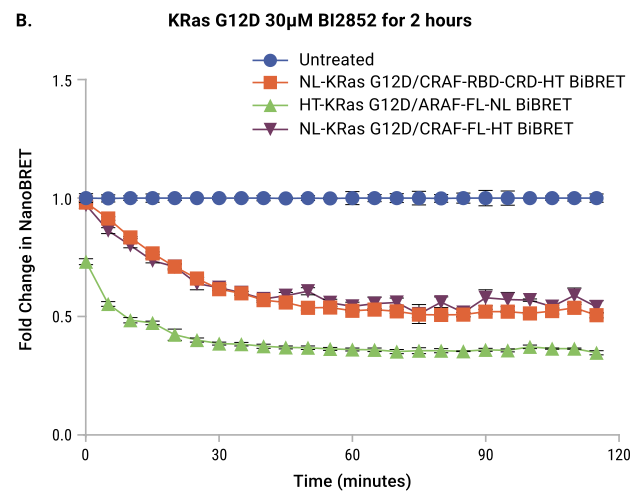
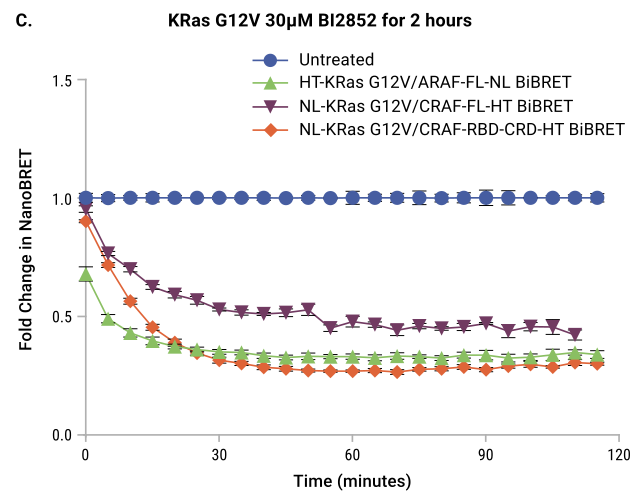
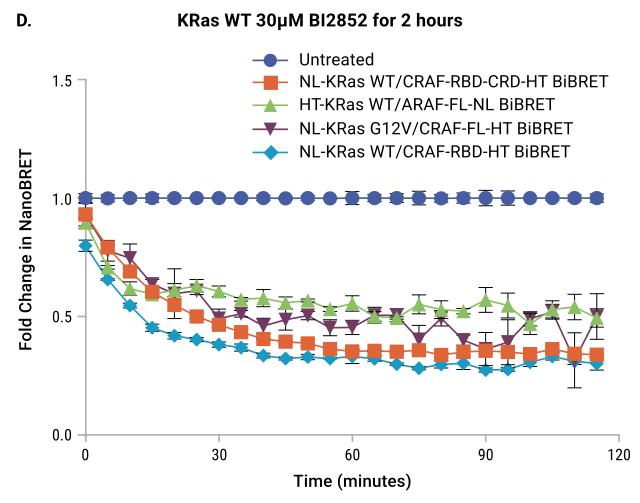
Using the NanoBRET® BiBRET PPI Starter System, RAS-RAF interactions were monitored in real time across multiple KRAS variants following treatment with BI-2852, a known RAS pathway inhibitor.
Better Signal Separation for an Optimized PPI Assay
NanoBRET® Technology enables sensitive, reproducible detection of protein interactions in the natural cellular environment. The use of full-length proteins expressed at low levels enables PPI monitoring and screening studies that reflect true cellular physiology.
The bright, blue-shifted donor signal and red-shifted acceptor create optimal spectral overlap, increased signal and lower background compared to conventional BRET assays.
You can read more about the capabilities of NanoBRET® Technology and see example data in the paper NanoBRET—A Novel BRET Platform for the Analysis of Protein–Protein Interactions, Machleidt et al. (2015) ACS Chem. Biol. 10(8), 1797–1804.
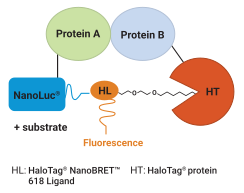
Depiction of energy transfer from a NanoLuc®-Protein A fusion (energy donor) to a fluorescently labeled HaloTag®-Protein B fusion (energy acceptor) upon interaction of Protein A and Protein B.
Choose Starter Systems, Prebuilt or Custom NanoBRET® Assays
Get started with NanoBRET® PPI Assays in a format that suits your needs. Design your own assays using the NanoBRET® Starter Systems, or choose from prebuilt, optimized assays for a number of popular research targets including our newest collection of RAS pathway interaction assays. You can consult with us to design a customized assay specific to your research.
Detection Instrument Requirements
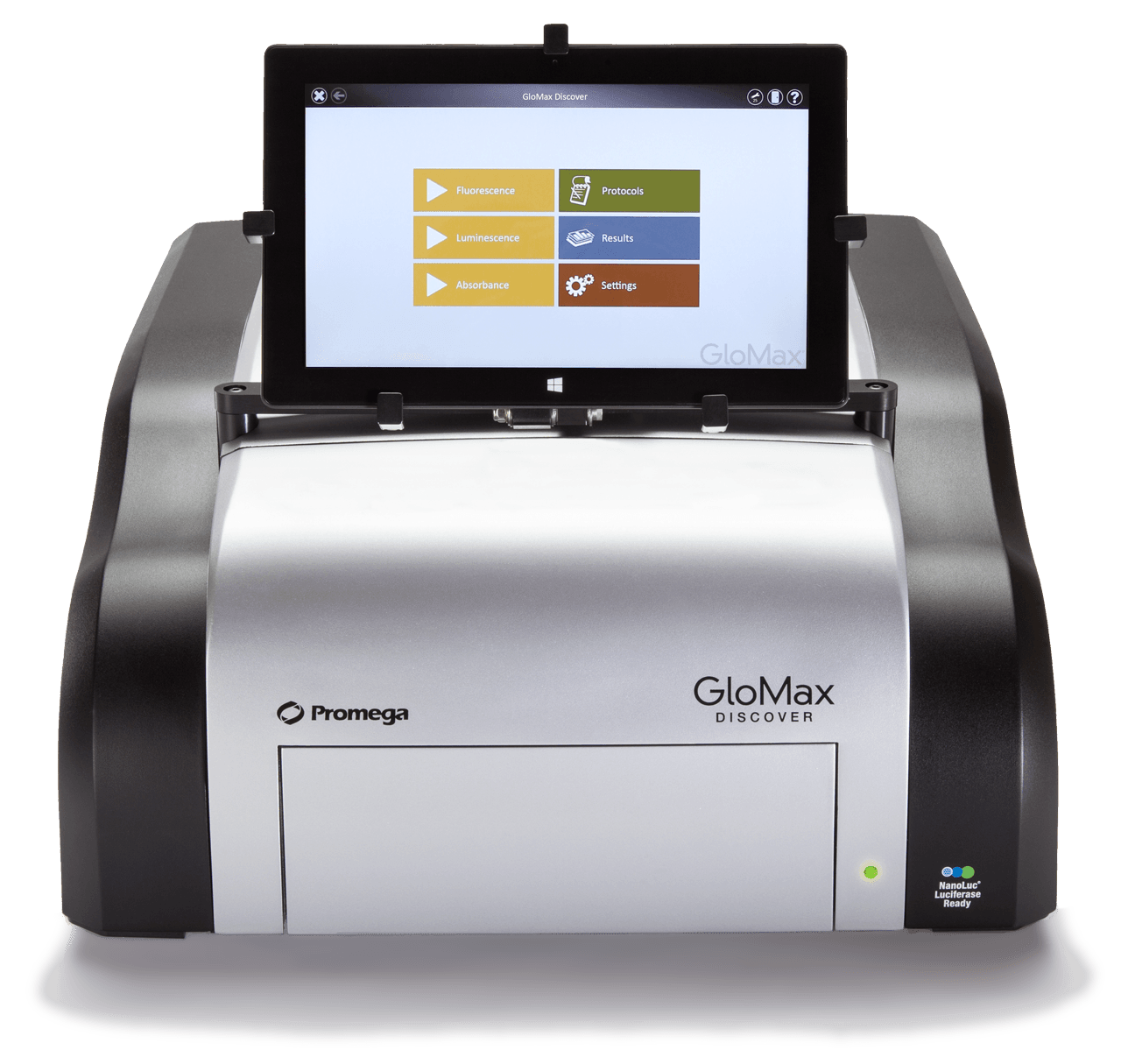
To perform NanoBRET® PPI Assays, you will need an instrument, such as the GloMax® Discover, capable of sequentially measuring dual-filtered luminescence and equipped with appropriate filters.
The ideal filter setup will include a band pass (BP) filter centered around 460nm to measure the donor signal (e.g., Emission 450nm/BP 80nm) and a long pass (LP) filter starting at around 600–610nm to measure the acceptor signal (e.g., Emission 610nm/LP). Filters outside of these ranges will miss critical measurements and compromise data quality.
Protocols
No protocols available
Specifications
Catalog Number:
Promega DNA Vector Limited Use Label License (LULL)
BY USE OF THIS MATERIAL, RECIPIENT AGREES TO BE BOUND BY THE TERMS OF THIS LIMITED USE LABEL LICENSE.
-
1. Usage Restrictions:
- 1.1. Recipient may use this material for research use only; no commercial use of this material is allowed without the written consent of Promega Corporation.
- 1.2. “Commercial use” means any and all uses of this material or derivatives by recipient for monetary or other consideration, including but not limited to product manufacture or resale of the material for any use and sale of derivatives for any use.
- 1.3. If recipient is a contract research organization (“CRO”), recipient may transfer or sell data or information generated using the material or derivatives to CRO’s customers who request such data or information, provided that the material or derivatives cannot be transferred from CRO to CRO’s customers.
-
2. Modification Restrictions:
- 2.1. Recipient shall have no right to modify or otherwise create variations of the nucleotide sequence of any proprietary gene including but not limited to luciferase, NanoBiT® technology (e.g., HiBiT), HaloTag® technology or genes included in fusion vectors.
- 2.2. Recipient shall have the right to make derivatives of cloning vectors by incorporating exogenous sequences provided the resulting fusion gene has <4 nucleotides deleted from the affected terminus of the proprietary genes.
-
3. For determinations of luminescence activity of this material and its derivatives, recipient must either:
- 3.1. Use Promega-branded luminescent assay reagents (LARs); or
- 3.2. Contact Promega to obtain a license for the use of LARs not manufactured by Promega.
-
4. For determinations of NanoLuc® or NanoBiT® luminescence activity of this material and its derivatives, recipient must either:
- 4.1. Use Nano-Glo®-branded LARs; or
- 4.2. Contact Promega to obtain a license for the use of LARs not manufactured by Promega.
-
5. For determinations of GloSensor™ activity of this material and its derivatives, recipient must either:
- 5.1. Use GloSensor™ cAMP Reagent for in vitro and in-cell applications, and VivoGlo™ Luciferin, In Vivo Grade, for animal applications for all determinations of luminescence activity of this product and derivatives); or
- 5.2. Contact Promega to obtain a license for the use of LARs not manufactured by Promega.
-
6. For uses of this material for energy transfer (such as bioluminescence resonance energy transfer), recipient must:
- 6.1. Use NanoBRET™-branded luminescent assay reagents (LARs; e.g., NanoBRET™ Nano-Glo® Substrate), Intracellular TE Nano-Glo® Substrate/Inhibitor or Intracellular TE Nano-Glo® Vivazine™/Inhibitor for all determinations of luminescent activity by this material and its derivatives; and
- 6.2. Use NanoBRET™-branded energy acceptors (e.g., NanoBRET™ tracers, NanoBRET™ dyes, BRET-optimized HaloTag® ligands) for all determinations of energy transfer activity by this material and its derivatives; or
- 6.3. Contact Promega to obtain a license for the use of the material and its derivatives for energy transfer assays to energy acceptors not manufactured by Promega. No license is needed if the energy transfer acceptor is a genetically encoded auto-fluorescent protein.
-
7. For uses of HaloTag® Technology in this material, recipient must either:
- 7.1. Use Promega HaloTag® ligands, which can be modified or linked to Promega or customer-supplied moieties; or
- 7.2. Contact Promega to obtain a license if Promega HaloTag® ligands are not to be used.
-
8. Transfer of Materials:
- 8.1. Unmodified material or progeny of such material cannot be transferred.
- 8.2. Derivatives of cloning vectors can be transferred to others for research use provided that at the time of transfer a copy of this label license is given to the recipients and recipients agree to be bound by the terms of this label license.
- 8.3. If recipient is not a CRO, user may transfer this material to a CRO in order to have CRO use the material solely on behalf of recipient to provide recipient data or information, and CRO may transfer or sell such data or information to recipient, provided that recipient provides CRO with a copy of this label license and CRO agrees to comply with this label license.
- 8.4. Notwithstanding any other provision in this label license, the recipient can transfer the material (original or derivative of a cloning vector) to a third party for the sole purpose of amplification of the vector, provided that at the time of transfer a copy of this label license is given to the third party and the third party agrees to be bound by the terms of this label license. The third party may not use any of the material (original or amplified) for its own purposes or further transfer the material to any other party.
-
9. Other Uses:
- 9.1. For any uses outside this label license, including any diagnostic, therapeutic, prophylactic or commercial uses, contact Promega for supply and licensing information.
-
10. Disclaimer and Governing Law:
- 10.1. PROMEGA MAKES NO REPRESENTATIONS OR WARRANTIES OF ANY KIND, EITHER EXPRESSED OR IMPLIED, INCLUDING FOR MERCHANTABILITY OR FITNESS FOR A PARTICULAR PURPOSE, WITH REGARD TO THE MATERIAL. The terms of this label license shall be governed under the laws of the State of Wisconsin, USA.
Resources
No related resources available
Related Products
Productos Similares
Usado con frecuencia junto con
NanoBRET® Nano-Glo® Detection Systems
Sistemas específicos de detección en ensayos NanoBRET™ Protein Interaction Assays con células vivas y con la posibilidad de realizar ensayos de punto final o cinéticas.
N1661, N1662, N1663, N2583, N2584, N2585
GloMax® Discover System
Lector de microplacas de alto rendimiento para la detección de luminiscencia, fluorescencia y absorbancia.
GM3000
GloMax® Galaxy Bioluminescence Imager System
A bioluminescence microscope that enables functional imaging of NanoLuc® Technologies.
GM4000, GM4005
CRAF/BRAF BiBRET Control Vector
Positive control for validating and optimizing BiBRET PPI assay performance.
CS1679D24