Sample Authentication and Purity
As a leader in short tandem repeat (STR) technology, Promega delivers highly sensitive and intuitive solutions for confirming sample identity and detecting mixtures.
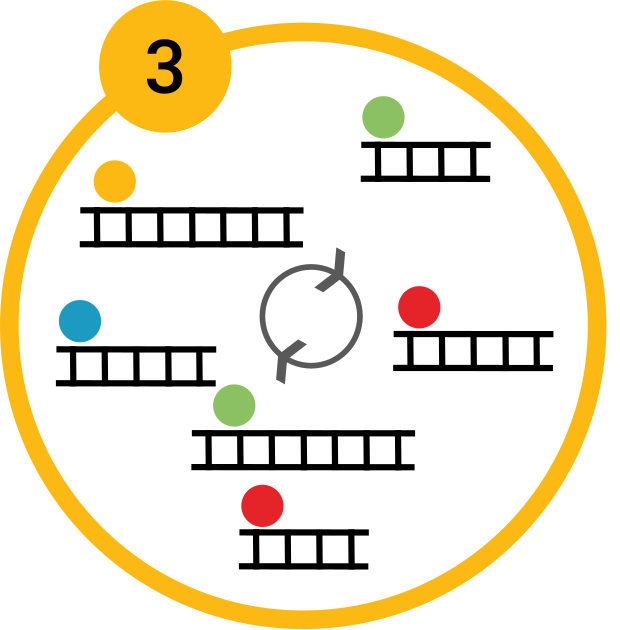
Our GenePrint® 24 System multiplexes 24 loci in a single five-color PCR reaction, generating informative STR profiles from as little as 100pg of DNA. Common clinical research applications include: verifying tissue provenance and identifying cross-contamination, tracking chimerism or maternal cell contamination, classifying genetic subtypes and monitoring mutations.
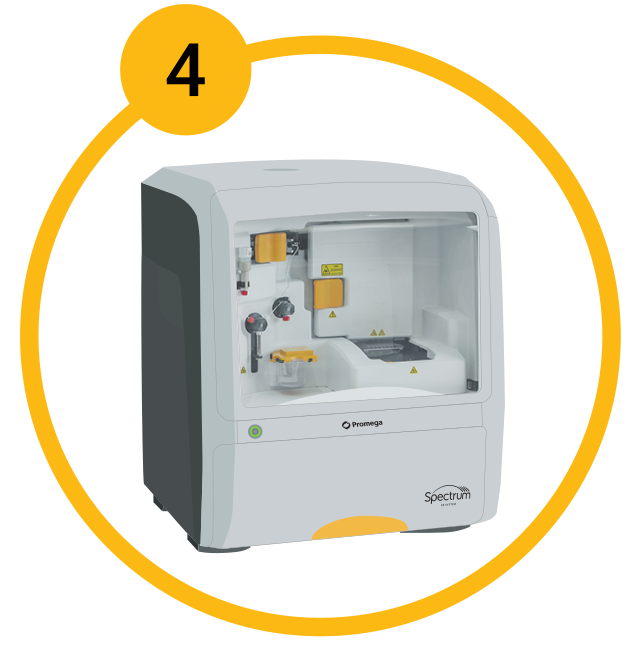
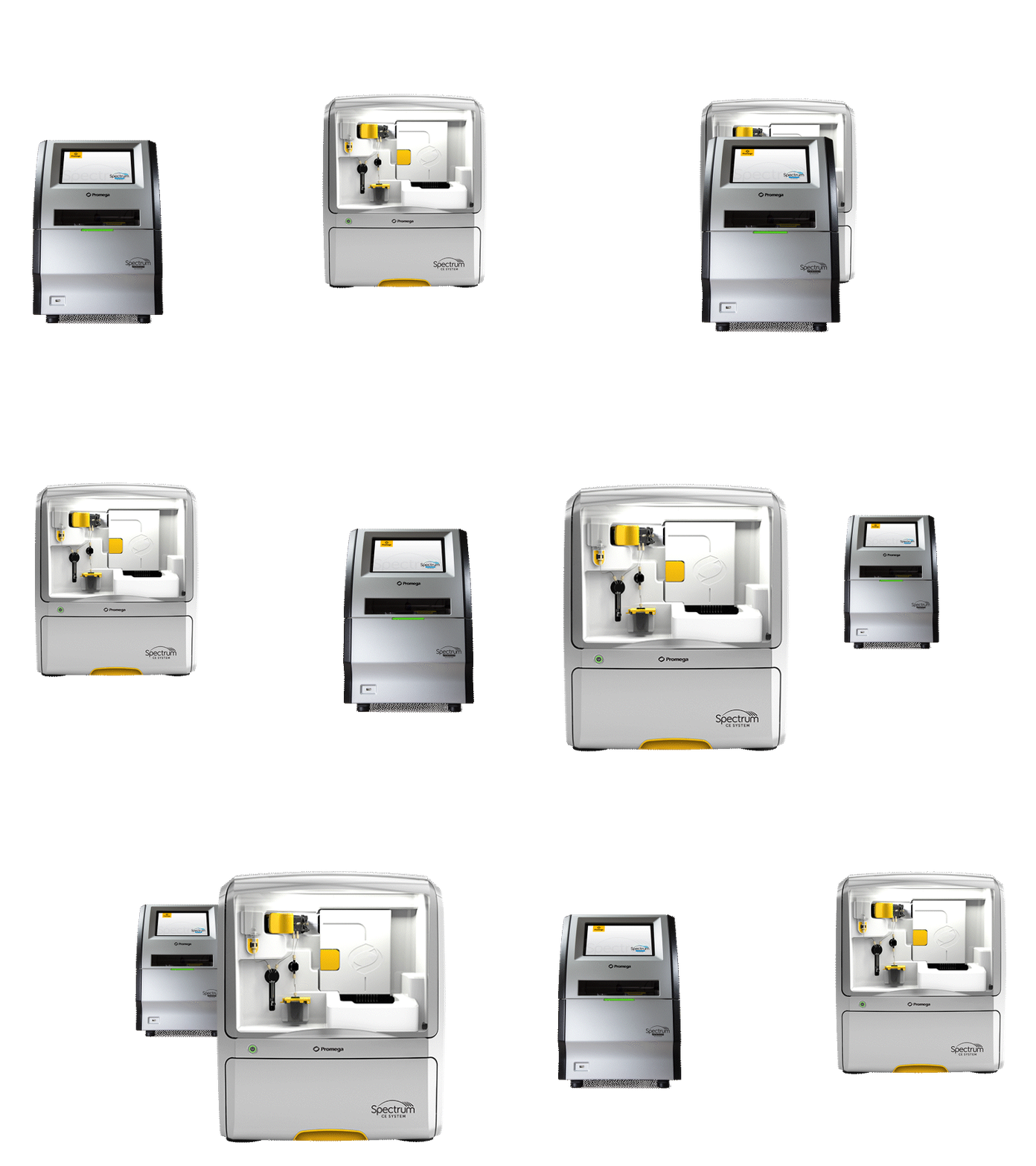
Pair GenePrint® 24 System with our Spectrum family of capillary electrophoresis (CE) instruments for low- or high-throughput analysis on a single, integrated workflow.


Filter By
Shop all Sample Authentication and Purity Products
Showing 6 of 6 Products
About Short Tandem Repeat (STR) Analysis
STR analysis is a widely used method for confirming sample identity in human samples and is commonly used in forensic, paternity, research and clinical research settings. This technique provides a fast and reliable way to verify sample provenance and ensure purity.
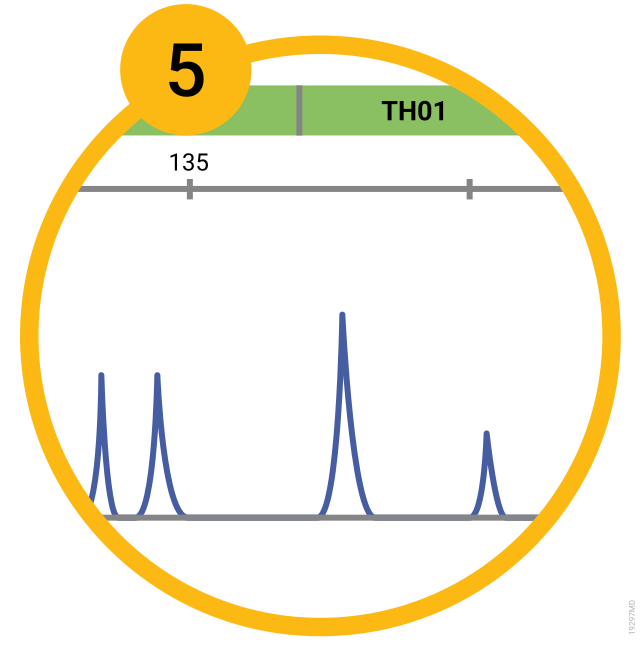
STRs are short, repetitive DNA sequences of 3–7 base pairs in length found throughout the genome. Select STR markers (locus/loci) are highly variable (polymorphic) between even related individuals, making them useful for comparing tissue samples to a reference to confirm the sample source. Amplified STR loci are separated on a CE instrument and individual allele calls are automated with analysis software for comparison. Because the loci are amplified in a single, multiplex PCR, STR analysis is both rapid and cost-effective as well as economical with precious samples.
A key advantage of STR analysis is high detection sensitivity with low DNA quantities. It can generate complete genetic profiles from as little as 100pg of DNA and detect contamination levels as low as 1% from an unintended source. Thanks to this sensitivity, STR analysis supports various clinical research applications.
Common Clinical Research Applications
Sample Verification
Confirm that matched samples originate from the same individual.
Contamination Detection
Spot minor contributors down to 1% in mixed samples.
Toxicology Testing
Verify donor identity with urine to rule out sample substitution during substance-use monitoring.
Chimerism Tracking
Monitor donor-recipient ratios post-transplant.
Twin Zygosity/Parentage Research
Provide genetic verification in familial relationships.
Maternal Cell Contamination (MCC)
Detect and quantify MCC to differentiate between maternal and fetal DNA to ensure test results from fetal specimens are not influenced by contaminating maternal material.
Molar Pregnancies
Distinguish complete versus partial hydatidiform moles by identifying androgenetic (paternal-only) STR patterns compared with biparental profiles.
Xenograft Authentication
Distinguish human within a background of mouse DNA in tumor engraftment research studies.
By detecting and characterizing minor contributors in human samples, STR analysis enhances reliability across multiple applications. It plays a critical role in safeguarding sample integrity, minimizing errors and ensuring reproducibility.

Related Cell Biology Products and Resources
Categories
Guides and Selectors
Intended use of the products mentioned on this page vary. For specific intended use statements, please refer to the product label.
